
The world of cybersecurity is becoming more sophisticated, and companies are having to step up and demonstrate commitment to robust security measures and ability to be prepared to comply with regulations. This has led to a greater number of companies discussing the differences between SOC 2 compliance and ISO 27001 compliance, particularly in the context of companies looking to expand into new international markets, companies using other companies’ customers’ data, or companies dealing with enterprise customers.
Why Security Compliance Matters in 2026
Security compliance is not just seen as an obligation for risk management. Customers, regulators, and business partners have come to expect that organisations can demonstrate the effectiveness of their information security controls in a clear manner.
The Role of Compliance in Strengthening Security and Trust
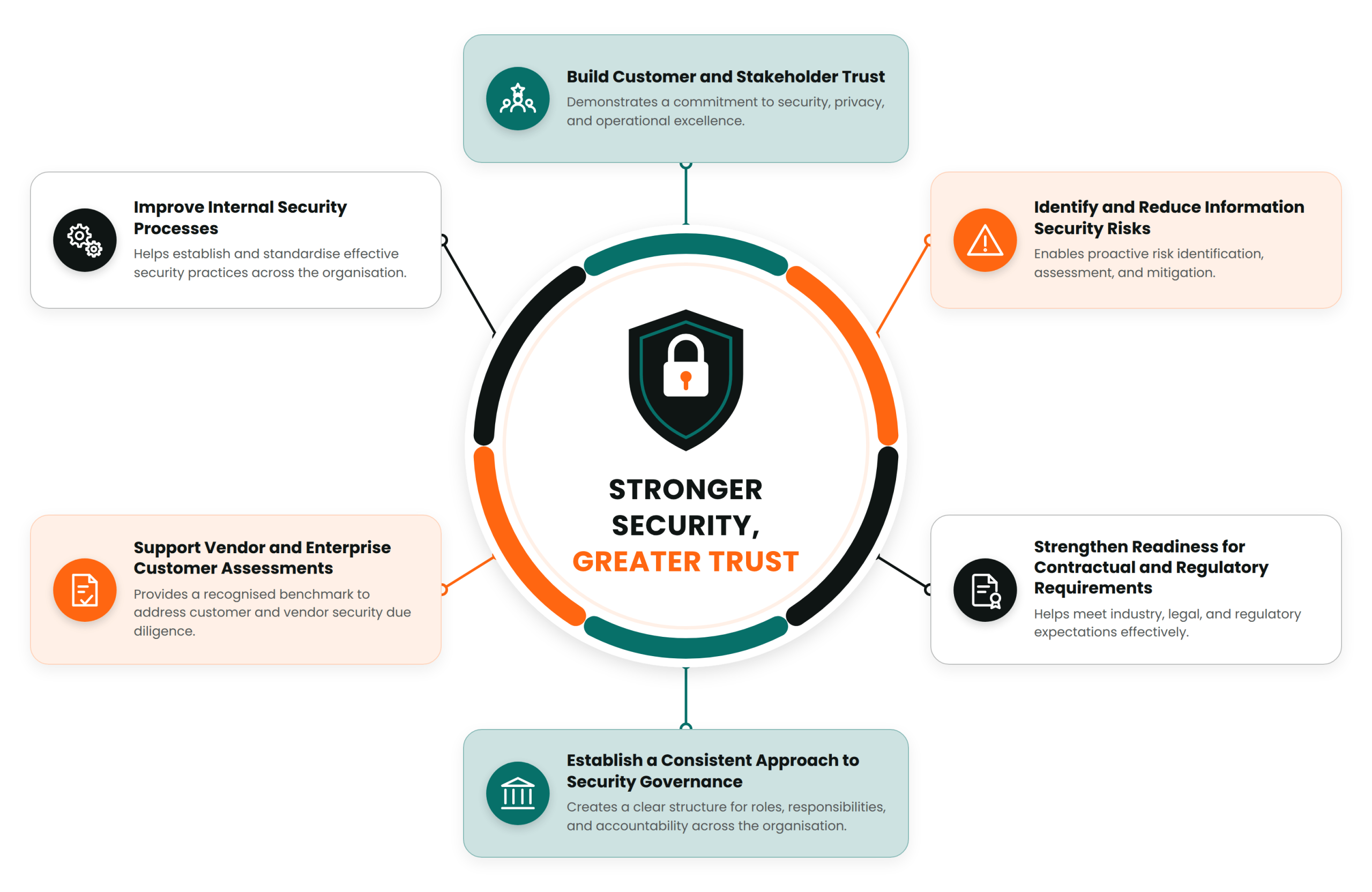
Security compliance is more important in 2026 than it ever has been before. Companies are being challenged on an ever-greater level to show in clear, quantifiable terms of how effective information security controls are and how it can handle the evolving security threats.
Compliance may also be a business benefit for an expanding business. By showing security maturity, an organisation could be eligible for more contracts, new markets and stand out from the competition. This is where the decision between SOC 2 and ISO 27001 will become relevant.
What Is SOC 2?
Service Organization Control 2 (SOC 2) is an auditing system designed by the American Institute of CPAs (AICPA) which offers standards for the service providers on the way to manage customer data securely.
Understanding SOC 2: The Five Pillars of Security and Trust
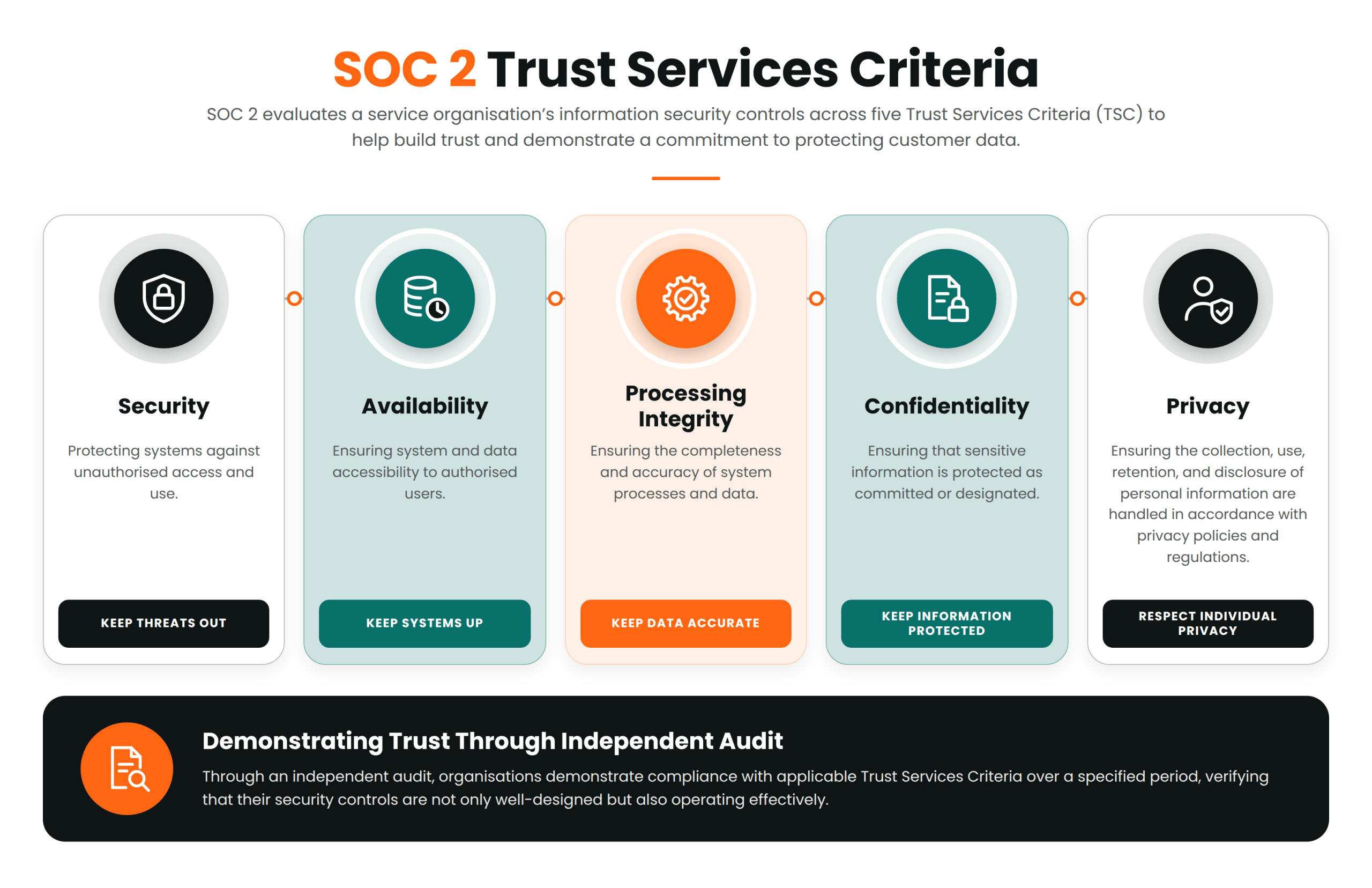
Here are some of the main advantages of SOC 2:
- Stronger customer assurance
- Evidence of the effectiveness of controls
- Support for security audits by vendors
What Is ISO 27001?
ISO 27001 is created by the International Organisation for Standardisation (ISO), a worldwide organisation that creates international standards. The ISO 27001 Information Security Management System (ISMS) framework sets the specifications for information security management systems.
The methodology of risk-based approach
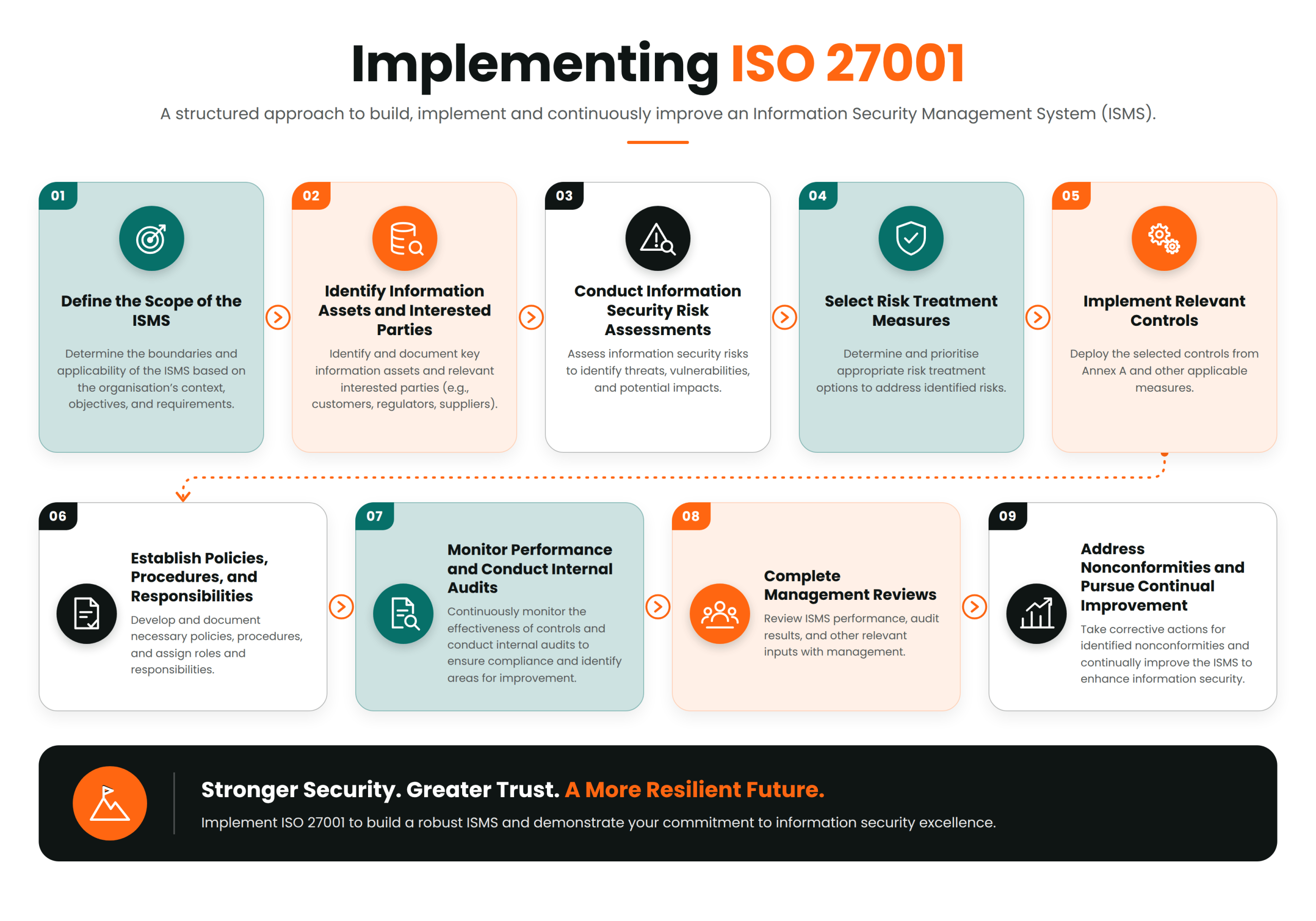
The main approach for organisations to get ISO 27001 certification is to determine the security risks that it has to face and their impact, introduce controls to mitigate the risks and then review how the ISMS performs.
The important benefits of ISO 27001 include being internationally recognised, follows global standards for security, and it is based on continual improvement. Basically, the approach sets organisations up with solid security governance and ensures a best-practice way to secure information.
Implementing ISO 27001: A Step-by-Step Approach
SOC 2 vs ISO 27001: Key Differences
The main difference between SOC 2 and ISO 27001 is the emphasis and reporting process.
| Area | SOC 2 | ISO 27001 |
|---|---|---|
| Name | American Institute of CPAs (AICPA) | International Organisation for Standardization (ISO) |
| Primary Focus | Evaluation of controls against selected Trust Services Criteria (TSC) | Certification of an Information Security Management System (ISMS) |
| Typical Output | SOC 2 Type I or Type II report | ISO 27001 certificate |
| Assessment Approach | Evaluation of control design and, for Type II, operating effectiveness over a specified period | Risk management, ISMS implementation, monitoring, and continual improvement |
| Geographic Use | Commonly used in North America | Widely used internationally |
| Primary Audience | Customers, prospects, and business partners | Customers, regulators, management, and other stakeholders |
| Evidence Emphasis | Evidence demonstrating the design and, for Type II, operating effectiveness of controls over a specified timeframe | Evidence that the ISMS is established, maintained, monitored, and continually improved |
Requirements apply to the defined ISMS scope, and criteria and control objectives are flexible and can be customised to the service.
SOC 2 shows how security controls function and ISO 27001 offers a defined methodology for information security management. In essence, ISO 27001 enables a company to implement an ISMS, assisting the company in maintaining control of security requirements in relation to the business.
While there is a possibility of one framework being better than the other, it is important for organisations to consider what they are looking to achieve rather than who has a better framework.
SOC 2 vs ISO 27001 Comparison: Which Is More Suitable?
When choosing between SOC 2 and ISO 27001, the decision would rely on customers, geographic region, and compliance needs.
Choose SOC 2 If:
- The primary customer base is in the United States
- They are a SaaS or cloud service provider
- Audit report is requested by enterprise customers
- SOC 2 compliance is a contractual requirement
Choose ISO 27001 If:
- They operate internationally
- The need is for a formal security governance framework
- They are looking for worldwide recognised certification
- Long-term security maturity is a strategic goal
ISO 27001 is a popular choice for organisations that want to increase information security compliance due to its governance model.
Which Framework Delivers Greater Value: SOC 2, ISO 27001, or Both?
The right choice depends on the business’ long-term goals. For example, a SaaS business with growth, could pursue ISO 27001 to improve governance and risk management and concurrently, could focus on SOC 2 to show they operate in control effectively over processes. However, overlapping domains (access control, risk assessment, incidents, etc.) make the combination suitable and beneficial to implement.
ISO 27001 vs. SOC 2: Understanding the Key Differences and Similarities
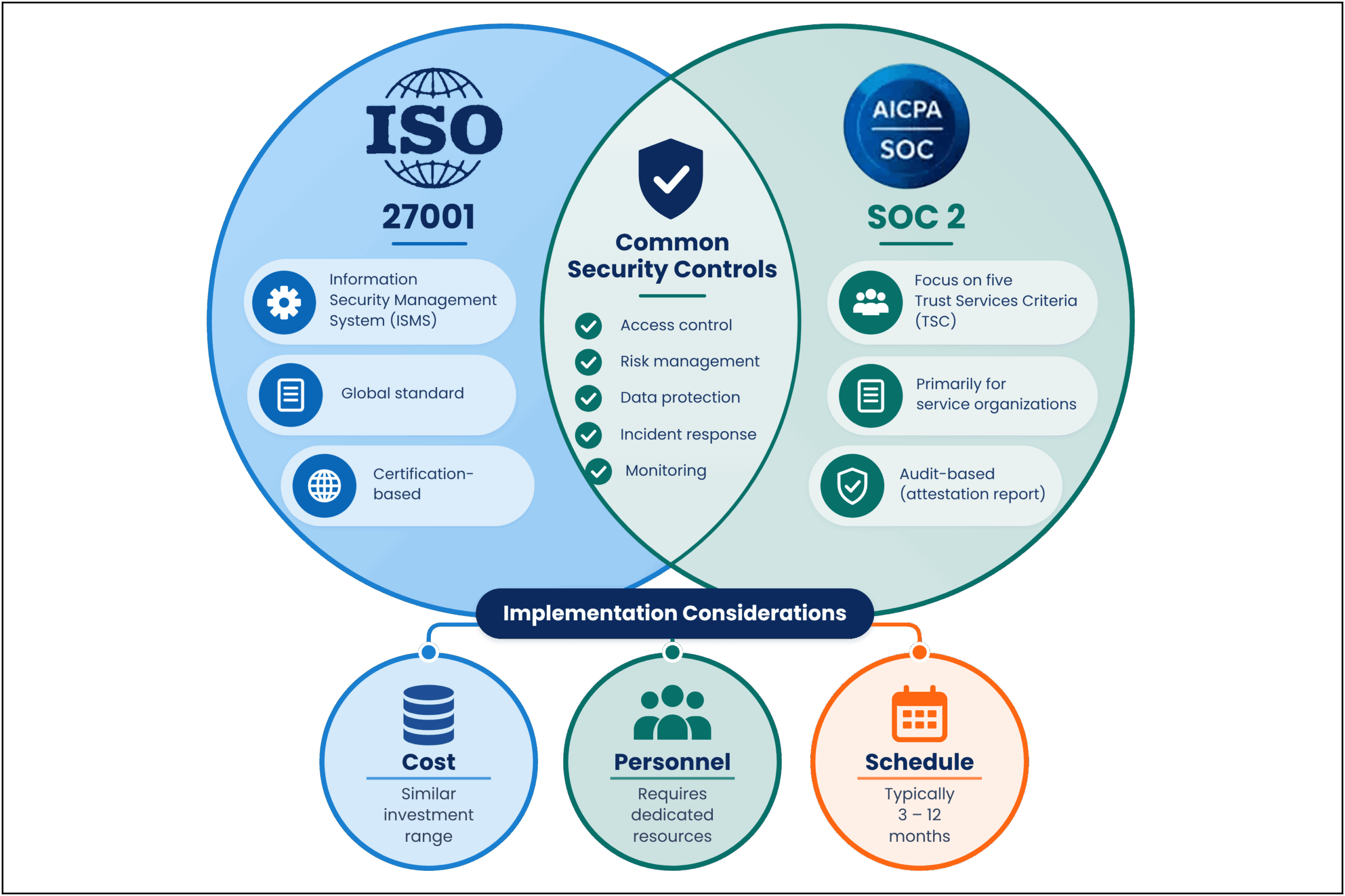 There is a significant investment of resources and time to implement either system. In most cases, SOC 2 projects involve a lot of work to gather evidence, conduct testing, and control attestation and submit it to the auditor before the audit. But ISO 27001 requires the engagement of the whole organisation using policy and procedural documentation, risk assessments, and leadership engagement.
Organisations need to create a flexible and scalable security compliance program that can easily be adapted to new threats.
Should you choose to pursue SOC 2 or ISO 27001, which is the better option?
Here are some factors to consider when assessing SOC 2 or ISO 27001:
- Customer expectations
- Regulatory obligations
- Geographic footprint
- Internal security maturity
- Strategic growth objectives
For many growing companies ISO 27001 compliance provides a good governance framework, and customer requirements can subsequently make further audit reporting worthwhile.
The most successful organisations view compliance as a way of doing business and not a certification process.
Conclusion
In choosing between SOC 2 and ISO 27001, the primary considerations need not be which of these two approaches is better. Whether to pursue SOC 2 or ISO 27001 depends upon the organisations’ objectives, customers’ needs, and risk appetite. While a SOC 2 is essential to deliver customer assurance, a business needs to implement an international standard approach with an information security management system, for which ISO 27001 is ideal. If the business spans different markets, then both may need to be pursued, adding both a layer of security and confidence.
Why Choose soc-audit.com?
At Ascentium India, we combine deep technical expertise with regulatory knowledge to help organisations achieve and maintain compliance effectively. Our team of certified professionals (CISA, CDPSE, FCA, and LLB) has extensive experience across governance, risk, compliance, cybersecurity, and audit frameworks. We support businesses through security assessments, compliance readiness reviews, risk management, internal audits, cybersecurity testing, and ongoing monitoring, helping them address key risks while building sustainable security and compliance programs. To learn more about our services, write to us at contactus@soc-audit.com.
Disclaimer
This blog is intended for general informational purposes only and should not be considered legal, regulatory, or professional advice. Organisations should seek guidance from qualified legal, compliance, and cybersecurity professionals before making decisions regarding security certification, audit readiness, or regulatory obligations.