
System and Organization Controls (SOC) is an independent audit and assurance report that showcases a company has effective controls and processes in place to safeguard data and ensure proper operations. It works as a trust certificate for service companies like cloud providers, payroll processors, SaaS companies, etc. There are different types of SOC reports that are considered as an industry standard for demonstrating operational maturity, risk management, and commitment to data protection.
SOC engagements are performed by independent CPA firms based on standards established by the AICPA. Currently, there are various types of SOC reports, including SOC 1, SOC 2, SOC 3, and SOC +, where another control framework or standard can be incorporated into the SOC report like HIPAA, NIST, and HITRUST, among others. In this blog we deep dive into the comparison between SOC 1 and SOC 2 reports.
Service Organizations
A service organization is a company that goes through a SOC attestation for products and services it provides to customers.
Examples of service organizations are as listed below:
| Service Organizations | |
| Data Centers | Facilities that house computer systems and associated components. |
| Cloud Computing Services | Delivery of computing services over the internet. |
| SaaS Providers | Software delivered over the internet on a subscription basis. |
| Credit Card Processors | Companies that handle credit card transactions. |
| Internet Service Providers | Companies that provide internet access to customers. |
| IT Security Management | Services that protect information systems from threats. |
| Financial Processing | Services that handle financial transactions and data. |
| Accounting and Auditing | Services that manage financial records and ensure compliance. |
| Customer Support | Services that assist customers with their inquiries. |
| Sales Support | Services that assist sales teams in closing deals. |
| Medical Claims Processing | Services that handle medical insurance claims. |
| Legal | Services that provide legal advice and representation. |
User Entities
User entities are the companies or customers that use the services provided by a service organization. For example, if a payroll company processes salaries for other businesses, those businesses are considered the ‘user entities’. In SOC reports, user entities rely on the service organization’s controls to ensure data is handled securely, accurately, and reliably.
Differences between SOC 1 and SOC 2 Report
While SOC 1 and SOC 2 reports may cover similar controls, these reports are issued for different purposes and follow different AICPA standards. Both SOC 1 and SOC 2 reports provide the user entity (customer/client) with the information of the system and design of the controls, and the tests performed to arrive at the opinion. The main distinction of these reports is who will read it and what purpose it serves for those readers. Both reports are used by user entities to ensure a degree of comfort and reliance on controls over the outsourced service when reviewing the report.
SOC 1 Report
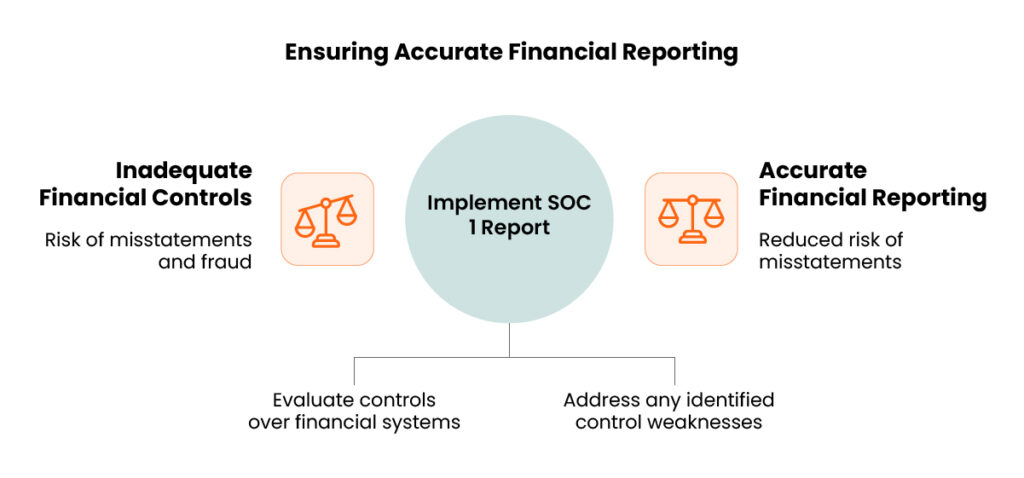
A SOC 1 report discusses the controls that a service organization puts in place to ensure accurate financial reporting and operations. If a service organization directly impacts a client’s financial statement, for example, payment processing, transacting processing, payroll processing, then a SOC 1 report will be the right choice. Any shortcomings of controls over a client’s financial systems would expose the user’s entity to potential misstatements, fraud, legal claims or regulatory violations.
SOC 2 Report
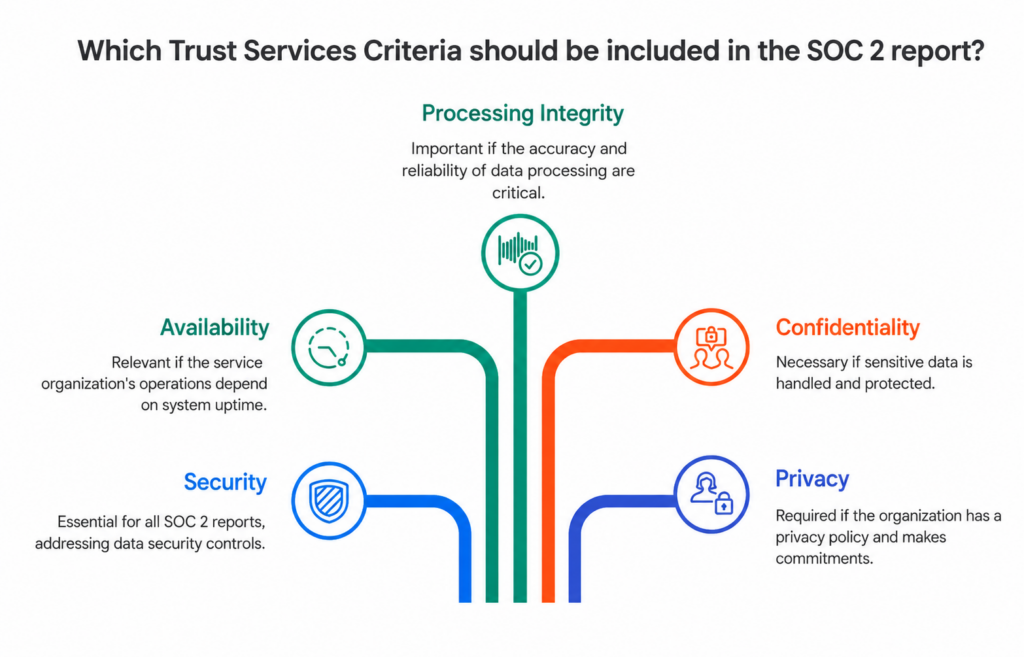
A SOC 2 report addresses a client’s controls relating to data security and the Trust Services Criteria that relate to it. The Trust Services Criteria covers the following five areas: Security, Availability, Processing Integrity, Confidentiality, and Privacy. While every SOC 2 report evaluates controls related to security, the remaining criteria are included only if they are relevant to the service organization’s operations. If the criterion of privacy is included, then there must be management assertions addressing all commitment in the statement of privacy practice. SOC 2 reports are often needed when an organization utilizes cloud computing or has customers in the technology space. The goal of a SOC 2 report is to ensure management and/or customers can rely on the security practices over their data at the service organization.
Key Similarities between SOC 1 and SOC 2 Report Frameworks
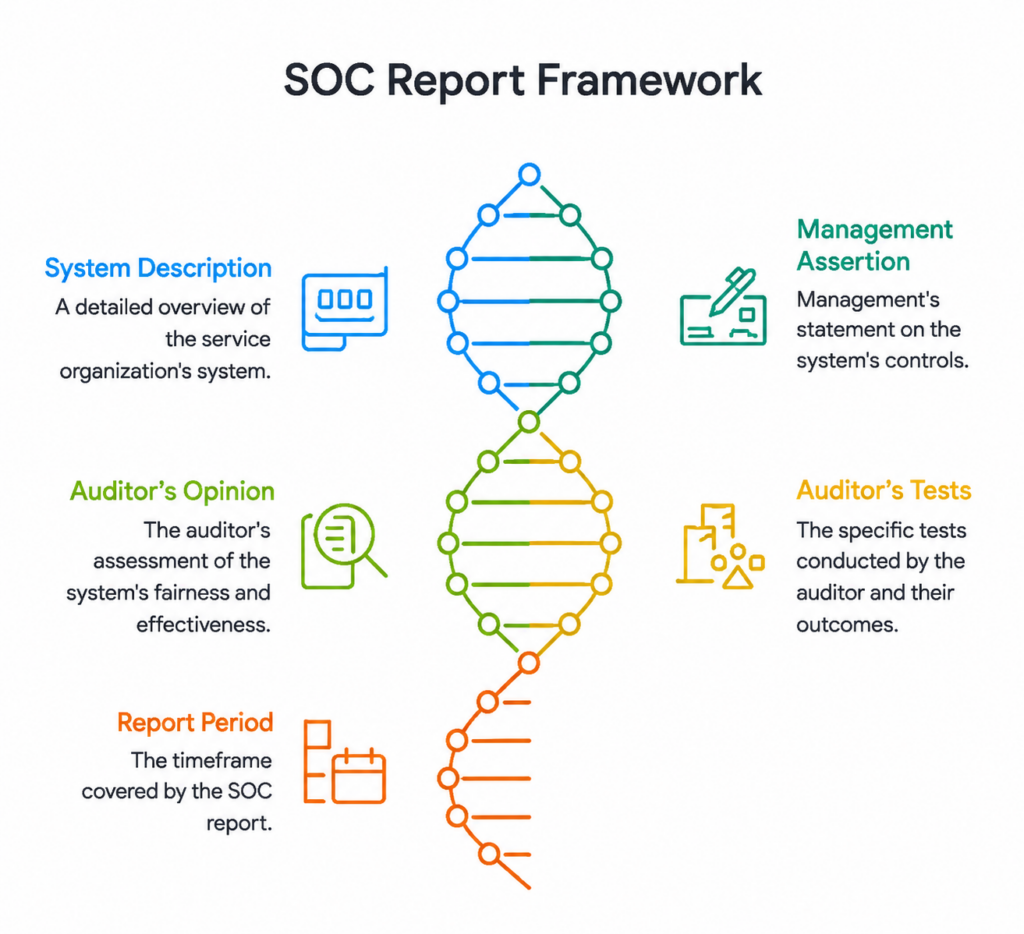
While there are differences, SOC 1 and SOC 2 reports include many of the same fundamental elements and components. They generally consist of the following:
- The description of the service organization’s system
- Management’s assertion over the systems and relevant controls
- Independent auditor’s opinion on:
-
- Fairness of the system description
-
- Suitability of the design of the controls
-
- Operating effectiveness of the controls (Type 2 report only)
-
- The tests performed by the auditor, and the results of the tests (Type 2 report only)
-
- The period covered by the report (Type 1, a specific point in time; Type 2, a span of time).
Why Choose soc-audit.com?
We provide end-to-end privacy, cybersecurity, and information security support, including privacy and information security gap assessments, compliance programme design, Data Protection Officer services, information security and cybersecurity assessments, vendor due diligence, security and privacy risk assessments, consent management, breach and incident response planning, and ongoing compliance monitoring. Our customised approach helps organisations identify and prioritise high-risk areas, strengthen their privacy and information security posture, enhance cybersecurity resilience, and build sustainable frameworks that adapt to evolving regulatory and security requirements across markets. To learn more about our services, write to us at contactus@soc-audit.com.