
For organisations aiming for SOC 2 compliance in 2026, the landscape will be very different from the one they experienced a couple of years ago. Auditors now expect to see better evidence collection processes, more developed vendor management programmes, more formalised programmes of change management, and greater automation of SOC 2 processes. The need for continuous monitoring is growing, and businesses must evolve their approach from periodic compliance to continuous compliance, to meet the changing expectations of customers, regulators, and auditors.
A modern SOC 2 compliance framework should require organisations to establish repeatable processes around SOC 2 controls, automate evidence collection, manage third party risk, and maintain and strong change management. This blog delves into the ways companies can enhance their compliance efforts and get ready for a successful SOC 2 audit in 2026.
SOC 2 Compliance in 2026: What to Expect and How to Prepare
The foundation of SOC 2 continues to be the Trust Services Criteria, which evaluate an organisation’s security, availability, processing integrity, confidentiality, and privacy practices. Auditors, however, have begun to evaluate the level of compliance maintained by an organisation over the course of the year, not just during the audit.
This change has placed increasing emphasis on SOC 2 Compliance Automation, Audit Evidence collection, and proactive governance. For organisations pursuing SOC 2 Type II certification, it is crucial to demonstrate that controls operate effectively over a sustained period, and monitoring must continue after the audit.
A new, robust SOC 2 Compliance Framework combines people, processes, and technology to facilitate audits and strengthen operational resilience.
Necessity of SOC 2 Automation: Why SOC 2 Automation is a Must
Manual compliance processes are prone to human error, delays and wasted resources. SOC 2 Automation can alleviate these issues by continuously monitoring controls and gathering compliance data.
- Advantages of SOC 2 Compliance Automation are:
- Reduced evidence collection time
- Improved accuracy of audit evidence
- Reduced audit preparation effort
- Continuous visibility into control effectiveness
- Increased support for continuous compliance
With SOC 2 automation, organisations can automatically collect screenshots, logs, system configurations, ticketing evidence, and system activity records that support SOC 2 Controls.
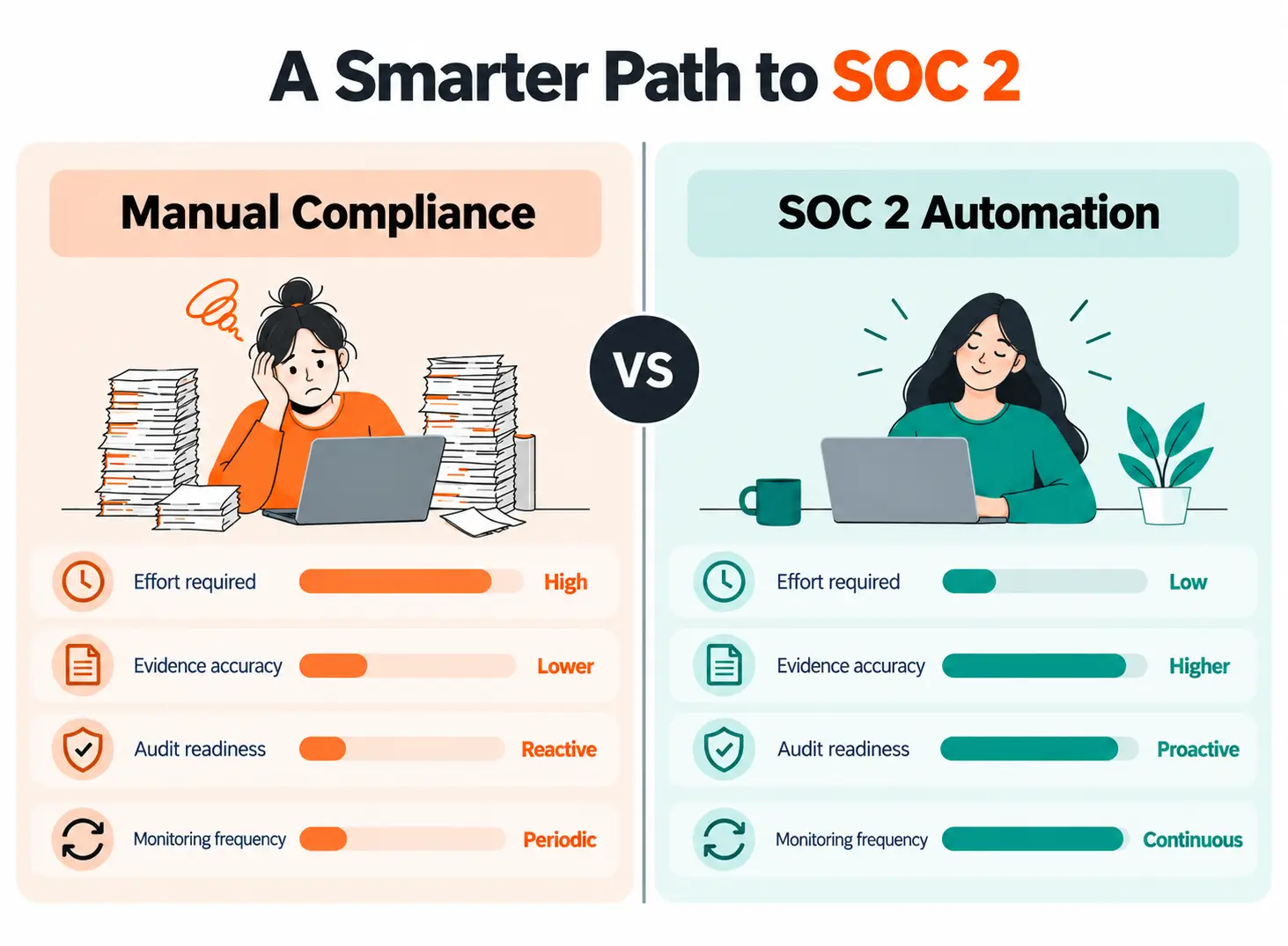 Figure 1: Manual Compliance vs SOC 2 Automation
Building an Effective SOC 2 Evidence Collection Process
The most frustrating aspect of a SOC 2 Audit is assembling a complete and accurate set of documentation. To gather, validate, and retain supporting records effectively, organisations need a formal SOC evidence collection process.
- Audit evidence comes from several sources, such as:
- User access reviews
- Security monitoring logs
- Incident response records
- Vulnerability management reports
- Backup verification reports
- Change approval records
- Vendor assessment documentation
Organisations that automate SOC 2 evidence collection store evidence centrally throughout the reporting period. This significantly reduces audit stress, as records are readily accessible rather than gathered just before the audit.
Regular SOC 2 evidence collection also enhances transparency between compliance teams and auditors, enabling quicker control validation.
Enhancing Vendor Risk Management and Third-Party Oversight
With increasing reliance on cloud platforms, software providers and outsourced services, SOC 2 Vendor Management has become a key compliance requirement.
A robust Vendor Risk Management (VRM) program can enable organisations to identify, evaluate, and track risks from third parties. To achieve this, effective third-party risk management ensures that vendors meet security standards aligned with organisational control requirements.
Key elements of SOC 2 vendor management include:
- Product quality management programmes
- Security due diligence reviews
- Contractual security requirements
- Periodic performance evaluations
- Ongoing vendor monitoring and reassessment
Many organisations incorporate vendor risk management into the procurement and onboarding lifecycle to assess risk before it enters the organisation.
Effective third-party risk management can also help organisations avoid inheriting security weaknesses that could affect compliance goals and customer trust.
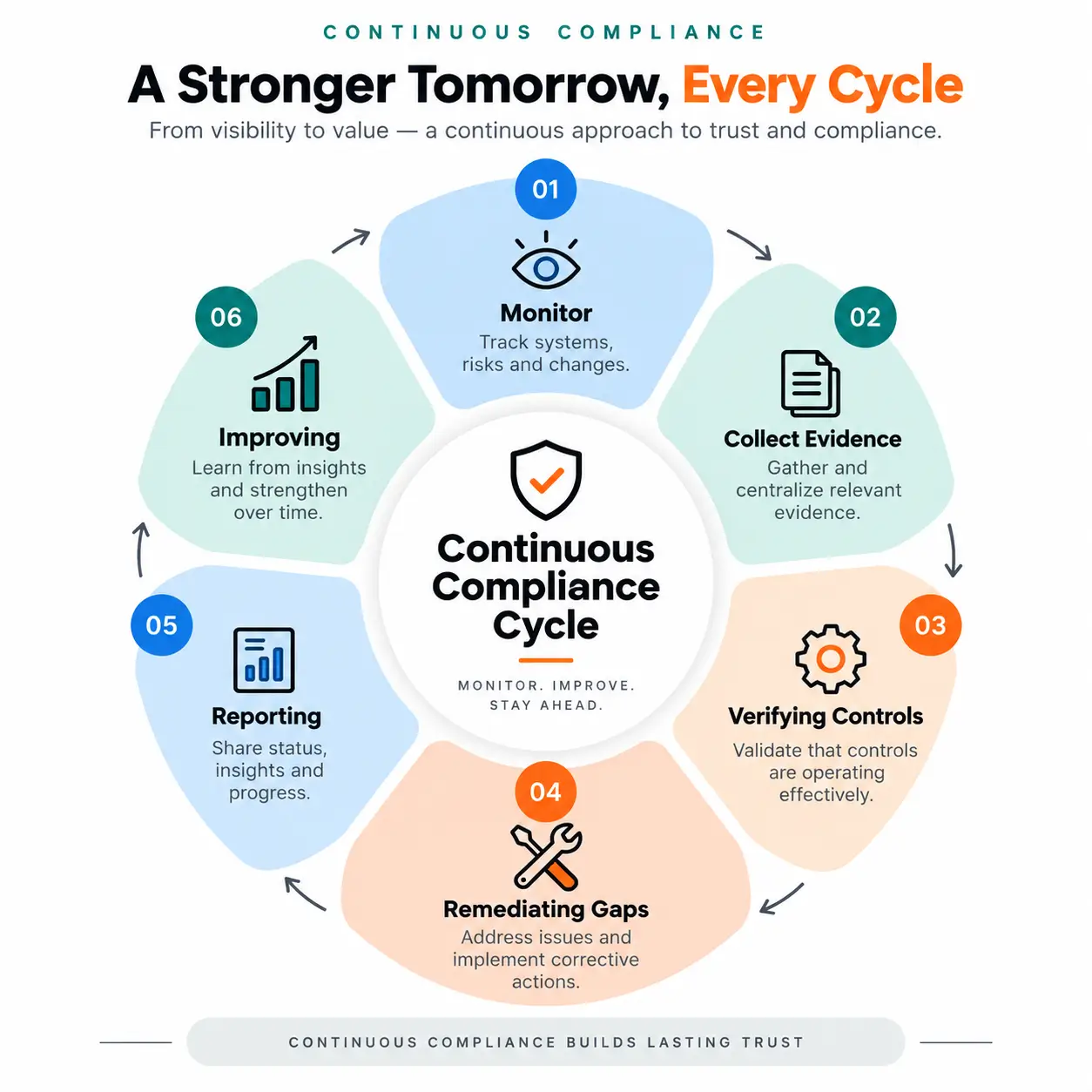 Figure 2: Vendor Lifecycle
SOC 2 Change Management and Change Control Best Practices
Operational and security risks can arise from changes to systems, applications, infrastructure, and business processes. That is why SOC 2 Change Management and change control programs are of particular interest to auditors.
A well-established SOC 2 Change Management process will make sure that changes are considered, tested, approved, implemented, and reviewed.
- Some of the major components of SOC 2 Change Control are:
- Formal change requests
- Risk assessment procedures
- Change approvals
- Testing and validation
- Segregation of duties
- Rollback planning
- Post-implementation review
A robust SOC 2 change control process can help organisations protect the effectiveness of existing SOC 2 controls and minimise operational disruption.
In practice, organisations with more mature SOC 2 change management programmes tend to have stronger governance and fewer audit findings.
Understanding Continuous Compliance and Monitoring
For businesses today, annual compliance audits are not enough. Year-round control monitoring is becoming more common as organisations adopt continuous compliance models.
With Continuous Compliance, organisations can:
- Quickly identify control failures
- Respond to threats promptly
- Minimise work for the audit team
- Improve stakeholder confidence
- Establish a stronger security posture
Continuous compliance is often implemented through automation platforms that automatically monitor access control, configurations, security events, and vendor risks.
When properly integrated, SOC 2 compliance automation helps ensure evidence stays up to date and easily accessible during the entire assessment process.
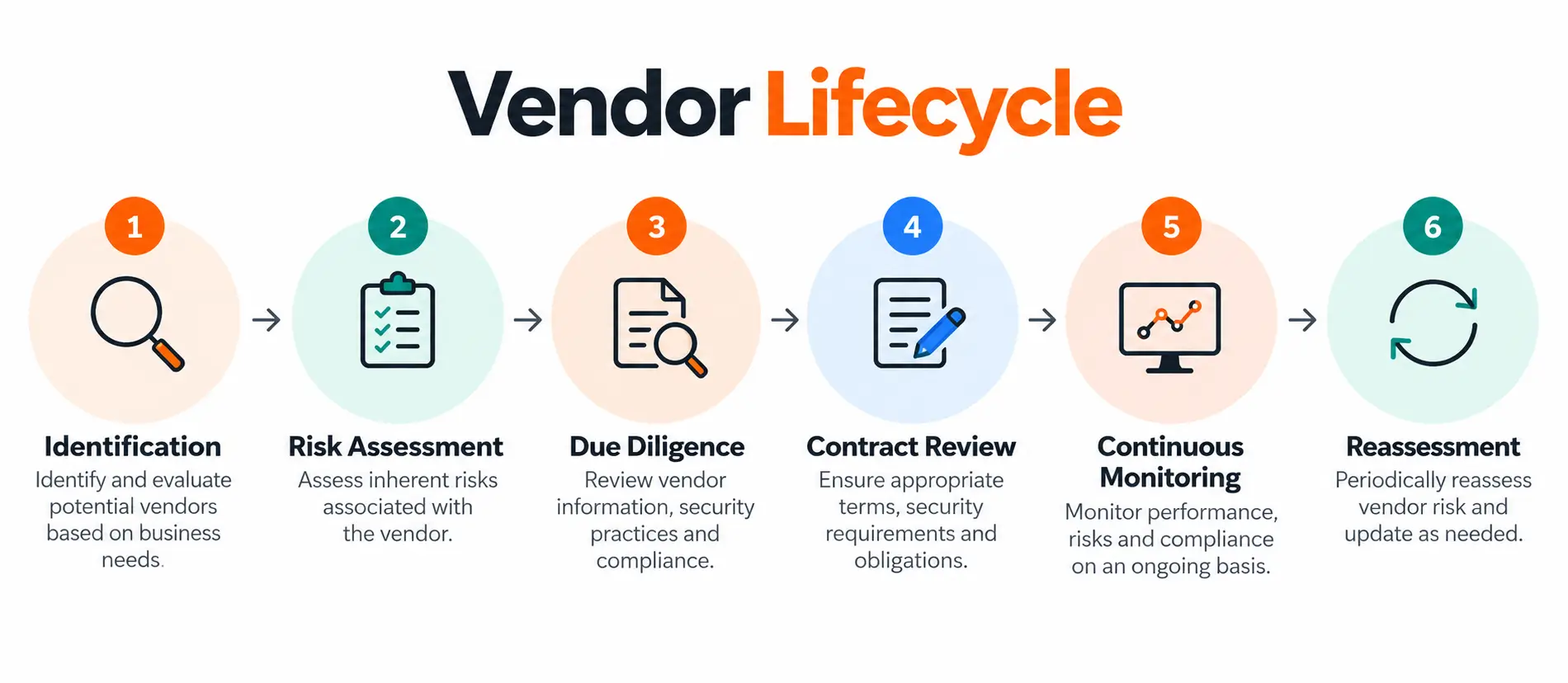 Figure 3: Continuous Compliance Cycle
SOC 2 Audit Readiness Strategies for 2026
Organisations undergoing a SOC 2 Type II audit should prioritise structured planning and continuous governance. Documentation, however, is only part becoming SOC 2 audit ready.
Recommended steps include:
- Create a SOC 2 compliance checklist
- Create a pre-production map for the map that is to be created
- Identify all existing maps that apply to the specified Trust Services Criteria
- Document evidence in an automated manner where possible
- Enhance SOC 2 vendor management procedures
- Document SOC 2 change management processes
- Regularly carry out internal assessments
- Continuously monitor the remediation activities
A SOC 2 Compliance Checklist is a comprehensive list of items that can be used to assess gaps prior to external testing and to enhance SOC 2 Audit Readiness. Companies that take proactive steps are more likely to see hassles-free audits and less remediation.
Conclusion
Continuous monitoring, proactive governance, and automation will be the cornerstones of SOC 2 Compliance moving forward. SOC 2 automation, SOC 2 evidence collection, SOC 2 vendor management and SOC 2 change control practices are becoming more stringent and the organisations that adopt them are more likely to meet the evolving audit expectations.
In a more complex security landscape, organisations will need to embrace SOC 2 compliance automation, develop and practice an effective vendor risk management program, implement a robust third-party risk management program, and embrace continuous compliance to be successful over time. Compliance with the Trust Services Criteria and robust SOC 2 controls paves the way for businesses to attain and maintain SOC 2 Type II certification with confidence and instil trust and transparency with clients.
Why Choose soc-audit.com?
At Ascentium India, we combine deep technical expertise with regulatory knowledge to help organisations achieve and maintain compliance effectively. Our team of certified professionals (CISA, CDPSE, FCA, and LLB) has extensive experience across governance, risk, compliance, cybersecurity, and audit frameworks. We support businesses through security assessments, compliance readiness reviews, risk management, internal audits, cybersecurity testing, and ongoing monitoring, helping them address key risks while building sustainable security and compliance programs. To learn more about our services, write to us at contactus@soc-audit.com.